Turkish Reading and Writing for Children Abroad: Small First Steps
Speaking Turkish at home and reading or writing a Turkish note need different practice. Begin with a family picture, familiar words and a message that matters.
Quick answer: A child growing up abroad may understand or speak Turkish while needing separate experience with Turkish reading and writing. Connect familiar spoken words to print, then build a short meaningful message. Observe letters, understanding and written expression separately. The starting point depends on what the child can do in each language, not age alone.
2026-10-23 · Stayeng parent guide
Key points
- Comfortable speaking does not automatically mean equally comfortable reading and writing.
- Match a word the child already knows with its written form.
- Keep the Turkish pairs I–ı and İ–i distinct.
- A real message to a relative gives writing a purpose beyond copying.
Put this guide into practice
- We chose three Turkish words my child already knows.
- We checked the letters and the word’s meaning separately.
- We prepared a two-sentence card for a family member.
- I noted the support needed in speaking, reading and writing for the teacher.
From a word to a short message
Try these three small examples together. They are not a test that establishes a literacy level.
What is the lowercase form of Turkish “I”?
- i
- ı
- l
Answer and explanation
ı: Turkish has two distinct pairs: I–ı and İ–i. The dot is not simply decoration or a font choice.
“Dede, bugün parka gittim. Bir kedi gördüm.” What did the child see?
- A dog
- A bird
- A cat
Answer and explanation
A cat: “Bir kedi gördüm” means “I saw a cat”. We are checking the message as well as reading the word.
Your child knows what to say on a card but finds writing difficult. What is a useful starting point?
- Write the idea together and let the child add a word or sentence
- Make the child copy the whole card ten times
- Only sign a ready-made card without discussing its meaning
Answer and explanation
Write the idea together and let the child add a word or sentence: The idea remains the child’s, while the amount of writing support can change. Copying alone is a different task from turning an intended message into writing.
Why can a Turkish-speaking child find reading difficult?
The language spoken at home may differ from the language used to learn reading and writing at school. A child may follow a family conversation comfortably but have seen a Turkish word in print less often. That observation alone is not a diagnosis or a measure of intelligence.
Collect three separate examples: describing a picture, reading a short Turkish sentence and writing an intended message. Note the help needed in each. A beginning reader and a child who reads fluently in another language do not need identical worksheets.
Check familiar-looking letters too
The Turkish Language Association, TDK, lists 29 letters in the Turkish alphabet. Make the distinction between I–ı and İ–i visible. Do not assume a letter name or sound learned in English transfers unchanged to every Turkish word.
Choose a few familiar words such as “ışık” (light), “iki” (two), “çanta” (bag), “şapka” (hat), “göz” (eye) or “üzüm” (grapes). Say, show and read one or two together instead of covering the whole list. For letters such as Ğ, use accurate examples within words rather than a shortcut that equates it with a single letter in another language.
Activity 1: Family word cards
Choose three familiar objects or family pictures. Write a short word underneath each, such as “dede” (grandfather), “kedi” (cat) or “ev” (home). Say the word and find the picture first. Then mix up the written labels and match them again.
The child may simply remember a card’s position, so change the order. A more confident reader can match the same word to a different picture. If letter decoding is still new, say the word together rather than turning the activity into an independent reading test.
Activity 2: Two sentences for someone
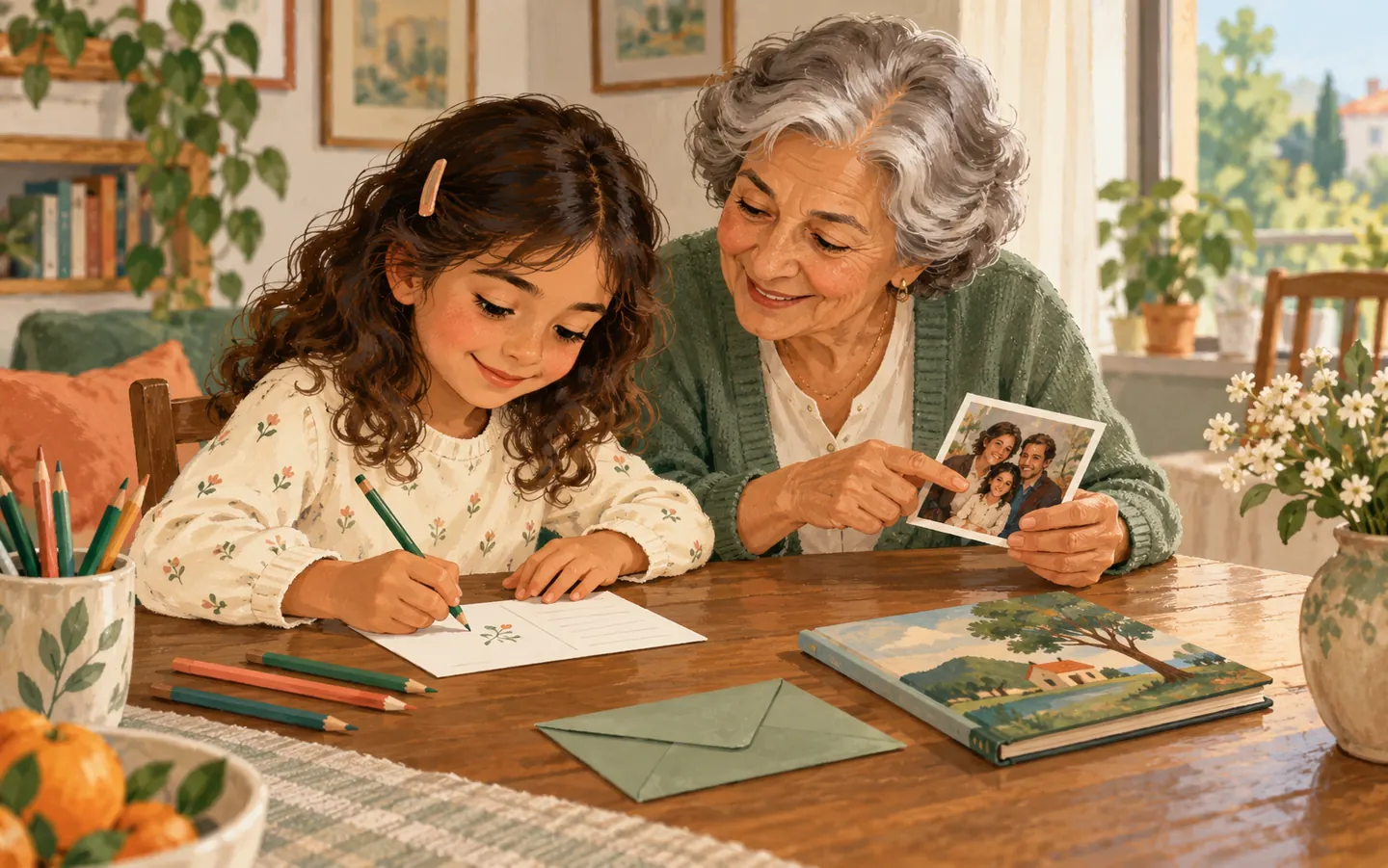
Prepare a short card for a relative. Let the child say what they want to communicate first. For example: “Dede, bugün parka gittim. Bir kedi gördüm.” This means “Grandpa, today I went to the park. I saw a cat.” Add the child’s own drawing.
If writing is difficult, write the child’s words and invite them to complete one word. A more independent writer can make the first draft. Read it together and ask what the recipient will understand. Sending it is optional: keeping it privately or reading it face to face is enough.
Choose a real purpose: thanking someone, telling them about an event or asking a question. Neat handwriting does not have to be the whole aim.
Activity 3: Read a note and do the action
Write a note the child can understand, such as “Kitabı masaya koy” — “Put the book on the table”. Read it together and ask the child to do the action. For a more comfortable reader, prepare two short notes and match each to the relevant object.
If the child sounds out the sentence but cannot act on it, check the meaning of its words. If they understand when you say it but find decoding print difficult, a different kind of support may be needed. Identify the stage that needs help instead of simply saying their Turkish is weak.
Make a small place in your family routine
Label a picture one day, add an item to a shopping list another day and make a short card at the weekend. You do not need a long daily repetition of the same worksheet. Choose a routine that fits alongside schoolwork and the child’s interests.
If family members have different levels of Turkish, give them different roles. One person can choose the picture and another can read the sentence. Searching for a word across two languages need not be embarrassing; find the useful word together.
What should you tell the Turkish teacher?
Go beyond “My child knows Turkish”. Explain which language they read at school, which they use at home and what they can do with a short note. Discuss speaking, reading and writing goals separately; confidence in one area does not establish the same level in another.
When exploring Stayeng’s Turkish lessons for children, bring these examples to the initial conversation. Agree a suitable literacy goal and materials with the teacher. These home activities do not replace teacher assessment or the child’s school education.
Want to bring this practice into a one-to-one lesson?
Discuss your child’s speaking, reading and writing goals separately with the teacher. Explore Turkish lessons or choose a free trial to discuss a starting point together.
Frequently asked questions
Is speaking Turkish at home enough for reading and writing?
Speaking is valuable experience, but recognising print, understanding text and writing a message may need separate practice. Observe the skills individually.
If my child reads English, will Turkish reading follow automatically?
Some reading experience may help, but Turkish letter-sound relationships, words and meaning can need separate attention. Do not assume a familiar letter works identically in every language.
Can we use another language during the activity?
You can use a shared language to explain meaning or find a missing word, then return to the Turkish word or sentence. Switching languages does not need to become a punishable mistake.
When should we discuss this with a teacher?
If choosing a starting point is difficult or the same task repeatedly needs substantial support, bring concrete examples to the teacher. Do not diagnose from these activities; teacher observation can help plan the next teaching step.