Singular and Plural in English: What Is in the Bag?
Explore one pencil and two pencils with real objects. Try a school-bag activity, useful examples and interactive questions with explanations.
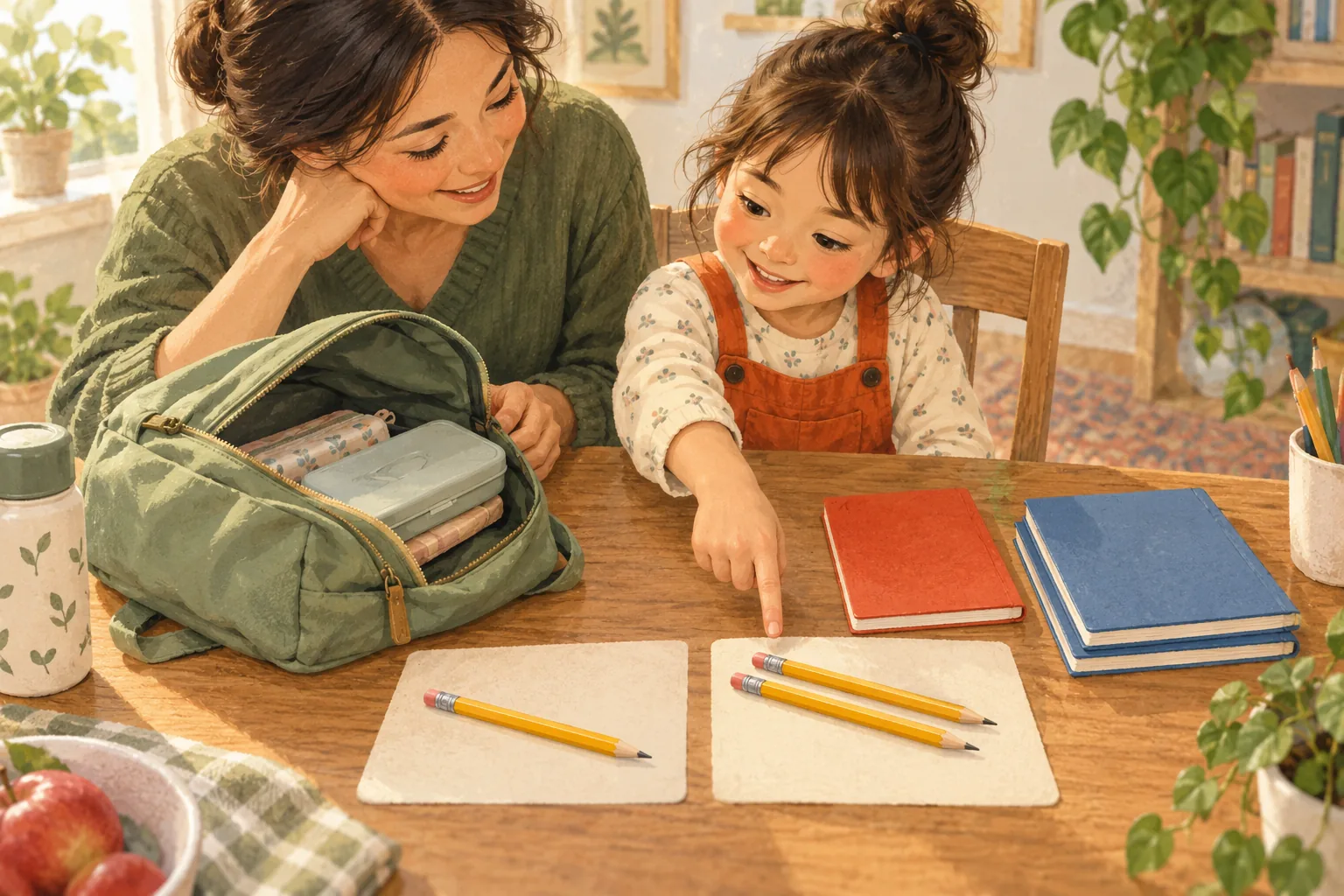
Quick answer: Place one object beside a group of two: “one pencil, two pencils.” Begin with a few regular examples before adding forms such as boxes or children. Show the difference in meaning first, then give children a reason to ask for the objects.
2026-10-07 · Stayeng parent guide
Key points
- Show one versus more than one before explaining spelling.
- Many nouns take -s, but not all plurals follow that pattern.
- Knowing a number is different from using an English plural.
Put this guide into practice
- Make one group with one pencil and another with two.
- Take turns saying “one pencil” and “two pencils.”
- Change the objects and let your child give instructions.
Complete the bag checklist
Choose the phrase that matches the quantity. Then make another example with two objects you have nearby.
Which phrase describes two pencils?
- Two pencil
- Two pencils
- One pencils
Answer and explanation
Two pencils: Two means more than one, so use the plural pencils.
Which phrase describes three boxes?
- Three boxes
- Three boxs
- Three box
Answer and explanation
Three boxes: The plural form of box is boxes.
Which phrase describes two children?
- Two childs
- Two child
- Two children
Answer and explanation
Two children: The plural of child is children; do not add -s here.
Notice meaning and language separately
If a child asks for “two pencil,” recognise that they have communicated the quantity, then model “Yes, two pencils.” Selecting the correct number of objects and forming an English plural are separate achievements. For Turkish-speaking families, the contrast is useful: Turkish uses “iki kalem,” while English uses “two pencils.”
Choose age-appropriate safe objects or drawings rather than small loose parts. One book and two books make a simple starting point. A child who cannot read does not need written labels. Pointing to a group while you say the phrase can be the first step.
Choose a few plural forms
Start with pencil → pencils and cup → cups. Box → boxes introduces another pattern, while child → children is a different form to learn. Do not turn these examples into a long list to memorise. Two familiar nouns are enough for the first game.
Use objects that can be counted individually. Words such as water behave differently; show two cups of water without teaching that every noun takes -s. Keep the activity focused on the useful phrases rather than trying to explain every exception at once.
Pack a school bag together
Choose a bag and a few school items. Say “Two pencils, please” and let your child put two pencils beside it. Then ask for “One book, please.” Check the items together before closing the bag: “One book. Two pencils.” Make the spoken language part of completing the task.
Let your child make the list on the second round. If you put down the wrong quantity, wait for a correction; offer one or two fingers as choices if needed. If English number words are unfamiliar, use drawings of quantities. Change the object rather than increasing the numbers just to make the game harder.
Transfer the pattern to a new object
The questions below help children recognise a pattern, but choosing an option is different from speaking independently. After the questions, show two objects that were not on the screen and ask “What have we got?” If their names are familiar, try the plural phrase together.
After a Stayeng school-bag or object-finding game, return to the items on your own table. Tell the teacher which two examples your child used. Next time, mix a familiar object with a new one. When an answer is mistaken, revisit that group instead of restarting the whole activity.
Want to bring this practice into a one-to-one lesson?
Choose an activity from this guide to discuss with your teacher. For regular lessons, compare package lesson counts, lesson lengths and total prices. If you would like to meet a teacher first, choose a free trial.
Frequently asked questions
Why do we not always add -s?
English has different plural forms. Begin with regular examples such as pencils, then introduce a few common alternatives such as boxes and children.
Should I immediately correct “two pencil”?
You can model “Yes, two pencils” without interrupting the conversation. Offer another opportunity to use the pattern on the next turn.